
Last updated October 30, 2026
DIY vs Professional ADU: The Placentia Homeowner’s Decision Guide
Here’s the counterintuitive truth about accessory dwelling units in Placentia: the most expensive DIY mistake isn’t a crooked wall or a leaky roof. It’s a title cloud. An ADU is not a kitchen backsplash. It lives on the property record, which means the decision you make in 2025 will show up in a title search in 2031. California buyers and their lenders have learned exactly what to look for, and an unpermitted or improperly documented ADU doesn’t just risk a fine. It can make the property genuinely difficult to sell or refinance. This guide walks through the real legal, financial, and practical trade-offs between building an ADU yourself and hiring a professional in Placentia, so you can make the call with your eyes open.
Quick Answer
In California and Placentia, you can legally act as an owner-builder and pull your own permits for an ADU, which saves 10 – 20% on general contractor markup but transfers all code-compliance liability and the 1-year resale restriction directly to you. DIY makes sense only if you have construction experience, plan to hold the property long-term, and will hire licensed subcontractors for electrical, plumbing, and structural work. For most Placentia homeowners, a hybrid approach, doing site prep, finishes, and fixtures yourself while hiring a licensed contractor for the shell and systems, delivers the best balance of cost savings and legal protection.
Table of Contents
- What California’s Owner-Builder Rules Actually Allow
- The Real Risk: Title Clouds, Resale Restrictions, and Lenders
- Where DIY Legitimately Saves Money Without Creating Risk
- How Prefab and Modular Systems Change the DIY Calculus
- Three Placentia Homeowner Profiles and What They Should Choose
- Placentia-Specific Code, Climate, and Market Factors
- The Real Cost Comparison: DIY vs Professional in Placentia
- Common Mistakes to Avoid
- When to Call a Professional
- Frequently Asked Questions
- The Bottom Line
What California’s Owner-Builder Rules Actually Allow
California law is unusually permissive when it comes to owner-builder projects, but that permission comes with strings attached that most Placentia homeowners never hear about until it’s too late. Under California Business and Professions Code Section 7044, you can act as your own general contractor on a property you own and occupy, or intend to occupy. You can pull the building permit, hire subcontractors, and manage the schedule. What you cannot do, regardless of owner-builder status, is perform or sign off on work that requires a state contractor’s license.
Work you can do yourself as an owner-builder in Placentia:
- Site preparation, excavation, and grading for the ADU footprint
- Interior framing and finish carpentry (baseboards, door casings, trim)
- Insulation installation, weatherproofing, and air sealing
- Drywall hanging and finishing
- Painting, flooring, tiling, and countertop installation
- Cabinet installation and hardware
- Landscaping, drainage, and exterior hardscape
- Fixture installation that does not involve new electrical or plumbing rough-in
Work that requires a licensed subcontractor, even with an owner-builder permit:
- Electrical panel upgrades, new circuits, and all wiring from rough-in to final connection
- Plumbing rough-in, drainage, and gas line installation
- HVAC system installation and ductwork
- Roofing on structures over 200 square feet
- Seismic anchoring and foundation bolting
- Any structural changes that require engineering sign-off
The California Contractors State License Board takes this seriously. If a homeowner does licensed work themselves, or hires an unlicensed worker for a project over $500 in combined labor and materials, the state can issue a citation. More practically, any future warranty claim or insurance dispute will hinge on whether the work was done by a licensed profession, and unlicensed work is the first thing a claims adjuster looks for. For Placentia homeowners, the question isn’t just “can I do this,” it’s “what happens to my property value and my legal standing if something goes wrong.”
The Real Risk: Title Clouds, Resale Restrictions, and Lenders
Here’s the part of the DIY ADU conversation that most guides skip, and it’s the part that matters most for Placentia homeowners. An ADU changes the property record. When you pull an owner-builder permit, the permit is issued in your name, and that fact becomes part of the public record. If the work is never finaled by the city, or if the final inspection reveals unpermitted deviations from the approved plans, the property has a compliance problem. California’s 2025 disclosure laws require sellers to disclose all unpermitted work and all open permits. Title companies research permits as a standard part of their reports. Lenders increasingly review permit history before approving refinancing or a buyer’s mortgage.
The 1-year resale restriction is the specific owner-builder trap that catches most Placentia homeowners by surprise. Under California Civil Code Section 896 and the related Health and Safety Code provisions, if you build an ADU as an owner-builder and then sell the property within one year of final inspection, the buyer is required to complete a specific owner-builder inspection, and the sale can be held up or even canceled based on the results. This restriction applies even if the work was done flawlessly. For any Placentia homeowner who might need to sell in the next 12 to 24 months, the owner-builder route carries a concrete, documented resale risk that a professional-build ADU does not.
In Placentia specifically, where a significant share of the housing stock dates to the 1960s and 1970s, the title implications compound. Older Placentia homes often have existing unpermitted additions, enclosed patios, or garage conversions. Add an unpermitted or owner-builder ADU with open permits on top of that, and the title search becomes a genuine obstacle. We’ve seen Placentia homeowners who saved $20,000 on a DIY project only to spend $30,000 on retroactive permits, corrections, and extended escrow timelines when they tried to sell. The DIY savings calculation has to include the resale math, not just the construction math.
Where DIY Legitimately Saves Money Without Creating Risk
None of this means you should stay completely hands-off. The smartest Placentia homeowners use a hybrid model, doing the work that is genuinely safe for an amateur and hiring licensed contractors for the work that carries real liability. This is where DIY involvement actually reduces project cost by 5 to 10 percent without creating a compliance headache.
Five DIY tasks that save money and stay within California owner rules:
- Interior painting and exterior trim work. A 400-square-foot ADU needs roughly 3 to 4 gallons of wall paint and 2 gallons of trim paint. Placentia paint suppliers charge $35 to $60 per gallon for quality interior paint. A painter charges $2,500 to $4,000 for the full ADU. DIY cost: under $500 in materials plus your own weekend labor.
- Flooring installation. Click-lock laminate or luxury vinyl plank runs $2 to $4 per square foot at Placentia floor suppliers. Professional installation adds $3 to $5 per foot. A 400-square-foot unit saves roughly $1,200 to $2,000 when you lay the floor yourself, and this work does not require a permit in Placentia.
- Cabinet assembly and installation. Flat-pack cabinets from IKEA or Home Depot run $80 to $180 per linear foot. Professional custom cabinets run $300 to $600 per linear foot. Assembling and mounting your own cabinets on a 10-foot kitchen run saves $2,000 to $4,000, and as long as you’re not moving plumbing or electrical, no permit is needed.
- Landscaping and hardscape. Placentia’s native plant palette and decomposed granite paths are DIY-friendly. Professional landscaping for an ADU exterior runs $8,000 to $15,000. Doing it yourself with drought-tolerant plants, mulch, and simple pavers costs $2,000 to $4,000.
- Fixture selection and purchasing. Buying your own faucets, light fixtures, door hardware, and appliances saves the 15 to 20 percent contractor markup on materials. A $5,000 fixture budget becomes $4,000 when you source it yourself.
What to Leave to the Professionals, Even If You’re Skilled
Even experienced DIY homeowners should not touch the following: electrical panel work, any gas line, foundation forming and concrete placement, seismic anchoring, roof structure, and window rough openings that require structural headers. These tasks carry injury risk and code liability that no amount of YouTube research offsets. In Placentia, the city’s building inspectors follow the California Residential Code closely, and a failed inspection on structural work means tearing out and redo, which can erase your DIY savings in a single day.
How Prefab and Modular Systems Change the DIY Calculus
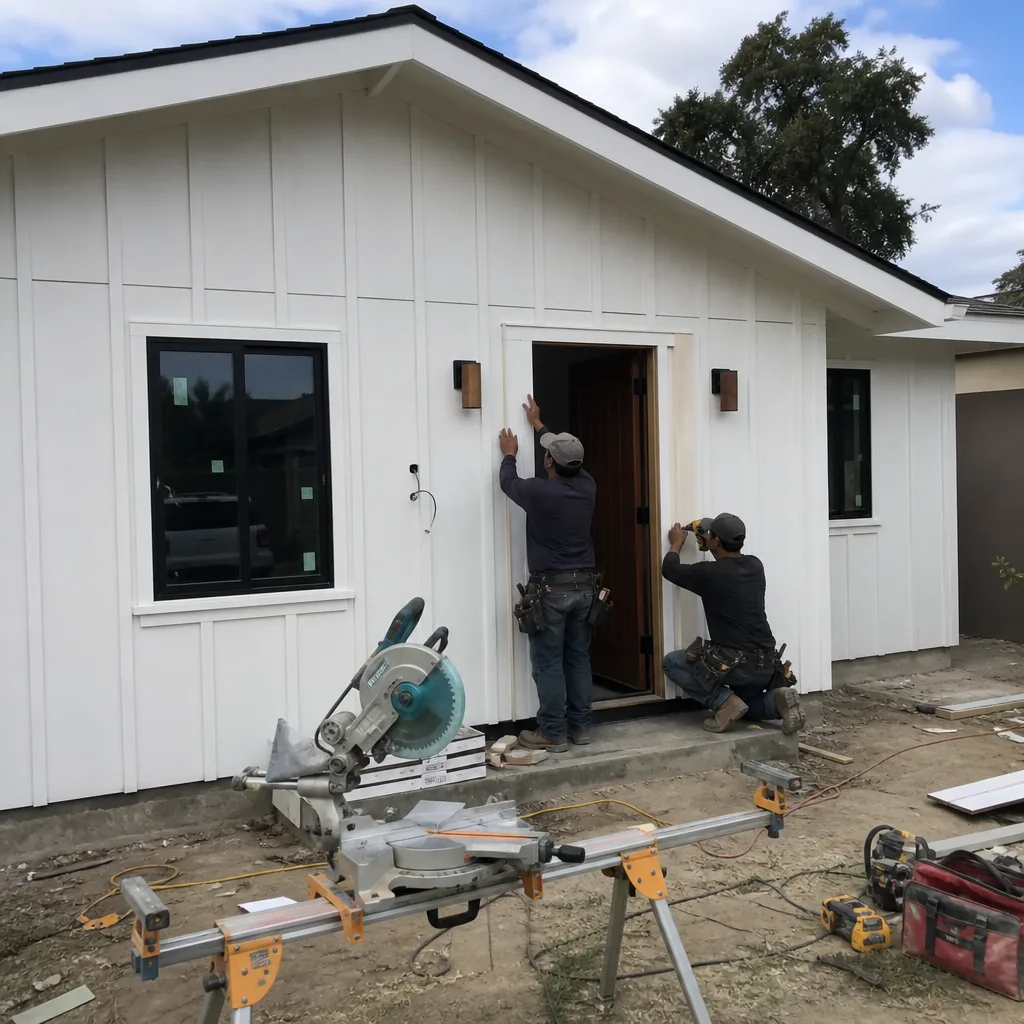
Prefab and modular ADU systems have changed the DIY conversation in Placentia, because they eliminate some of the riskiest parts of the build while still leaving room for owner involvement. Classic ADU Builders works with several of the systems Placentia homeowners ask about most, and the reality is that “prefab” does not mean “assemble it yourself.” It means “assembled by professionals in a controlled environment, then installed by professionals on your site.”
Take ADU Builders in Placentia as the reference point. A Boxabl unit arrives as a folded module that requires a crane, a foundation that meets manufacturer specs, and licensed trades to connect electric, plumbing, and HVAC. A Tuff Shed conversion is the closest thing to a DIY-friendly ADU, because the shell is prefabricated and can be ordered and placed with minimal site work, but even a Tuff Shed becomes permitted living space only when a licensed electrician and plumber complete the rough-in and the city’s final inspection passes.
What the homeowner can legitimately do with a prefab ADU:
- Order and coordinate the delivery of a Tuff Shed shell
- Paint and finish the interior after the shell is placed and systems are roughed in
- Install flooring, cabinets, and fixtures once the permitted work is signed off
- Handle landscaping, exterior steps, and drainage around the unit
What still requires licensed trades, regardless of the prefab system:
- Foundation work for anything heavier than a Tuff Shed
- Electrical service connection and panel work
- Plumbing connection to the main line and any gas line work
- Crane placement and structural anchoring for modular units like Boxabl, Abodu, or Cover
We’ve found that Placentia homeowners drawn to prefab for its speed often underestimate the site work: utilities trenching, foundation forms, and final connections can take 4 to 8 weeks even after the module is delivered. The prefab system removes much of the framing risk from the DIY plan, but it does not remove the permit, the inspection, or the licensed-trade requirement. The honest framing is this: prefab makes the professional build faster and more predictable. It does not make it a DIY project.
Three Placentia Homeowner Profiles and What They Should Choose
The right answer depends more on your timeline and your intention for the property than on your skill with a hammer. Here are the three Placentia homeowner profiles we see most often at ADU Builders in Placentia, and what the DIY-versus-professional math looks like for each.
Profile 1: The Long-Term Landlord
You plan to hold the Placentia property for 10-plus years and rent the ADU for income. Placentia’s ADU rental market supports $1,800 to $2,400 per month for a well-finished one-bedroom unit near the 57 or 91 freeways. In this scenario, the owner-builder route can make sense if you have genuine construction experience, because the resale restriction is irrelevant, the rental income covers any correction costs over time, and the upfront savings of 10 to 15 percent compound as equity. But even here, you should hire licensed subcontractors for all systems and pull permits properly. The rental income model only works if the unit is legal, because Placentia tenants can and do verify permit status, and an illegal unit gives a tenant negotiating leverage you don’t want.
Best choice: Owner-builder permit with licensed trades for systems, DIY for finishes. Or, to eliminate the owner-builder resale restriction entirely, hire a licensed general contractor for the shell and systems, and negotiate to do finish work yourself.
Profile 2: The Near-Term Seller
You’re in a 1970s ranch in Placentia and you might sell in the next 24 to 36 months. The ADU is about adding value before listing. In this case, DIY is the wrong move. The owner-builder resale restriction, the title report complexity, and the buyer’s lender scrutiny around unpermitted work all cut against you. A professional build with clean permits, a final inspection certificate, and a transferable workmanship warranty is a selling point. An owner-builder ADU with open permits is a negotiating weakness. The cost of a professional build in Placentia is higher, but you recover it in sale price and speed to close.
Best choice: Licensed professional build with full permits and final sign-off. The clean title and warranty are worth more than the 15 percent savings.
Profile 3: The Multi-Generational Housing User
You’re building an ADU for an aging parent, an adult child, or a family member with care needs. This is the profile where health, safety, and universal-design decisions matter more than cost savings. Grab bars, zero-threshold showers, wider door frames, and proper ventilation are not DIY-friendly details, and getting them wrong creates daily safety hazards for a vulnerable occupant. In Placentia, where summer temperatures routinely hit the high 90s, the HVAC sizing and insulation quality are health issues, not comfort preferences. This profile should default to a professional build with an experienced contractor, and DIY involvement should be limited to cosmetic choices like paint colors and hardware selection.
Best choice: Professional build. The occupant’s safety and the building’s compliance are both too consequential to risk on a learning curve.
Placentia-Specific Code, Climate, and Market Factors
Placentia has particular characteristics that shape the ADU decision in ways that a generic California guide won’t cover. The city’s Planning Division administers ADU applications under the state’s 2020 ADU mandate, which means Placentia cannot legally impose most of the obstacles that older municipal codes used to create, but the city’s specific interpretation and inspection culture still matter.
Climate and construction: Placentia sits in a hot-summer Mediterranean climate zone. Summer highs from June through September average 89 to 94 degrees. An ADU needs proper insulation (R-30 ceiling minimum, R-13 walls), correctly sized HVAC, and heat-reflective roofing. Incorrectly installed insulation, especially around vents and recessed lights, creates condensation and mold risk in the cooler winter months. We see more DIY failures from poor air sealing than from any other single cause in Placentia’s climate.
Seismic requirements: Placentia is in a high-seismic zone near the Whittier-Elsinore fault system. California requires ADUs to meet current seismic standards, including foundation anchoring and shear wall specifications. These are engineered requirements, not rough carpentry. A DIY foundation that doesn’t match the approved engineering can fail inspection and require demolition and re-pour, which is a $8,000 to $15,000 mistake on a typical 400-square-foot Placentia ADU.
Permit timeline: Placentia’s building department typically processes ADU permit applications in 30 to 60 days for complete submissions, but incomplete owner-builder applications often take 90 days or more because of back-and-forth correction requests. Professional ADU builders in Placentia know the city’s specific plan-check preferences and submit permit sets that pass review the first time, which compresses the pre-construction window by six to eight weeks.
Neighborhood context: Placentia neighborhoods, from Alta Placentia near the downtown corridor to the newer tracts near Golden Avenue and the areas bordering Yorba Linda and Fullerton, have different HOA overlays and setback expectations. An owner-builder researching these constraints from scratch spends 20 to 40 hours just assembling the documentation. A contractor who has already pulled ADU permits in Placentia knows which neighborhoods have particular drainage requirements, which HOAs have ADU restrictions, and which lot configurations trigger extra review.
The Real Cost Comparison: DIY vs Professional in Placentia
Here is the honest math on a standard 400-square-foot one-bedroom ADU in Placentia as of 2025. The numbers below reflect local material pricing, Placentia permit fees, and typical subcontractor rates in north Orange County.
| Cost Category | DIY Owner-Builder | Professional Build |
|---|---|---|
| Placentia permits and impact fees | $3,500 – $5,000 | $3,500 – $5,000 |
| Foundation (poured, engineered) | $12,000 – $16,000 (subcontractor) | $11,000 – $15,000 |
| Framing and shell | $18,000 – $24,000 (you or sub) | $16,000 – $22,000 |
| Electrical rough-in and panel | $6,000 – $9,000 (licensed sub) | $5,500 – $8,500 |
| Plumbing rough-in and fixtures | $7,000 – $10,000 (licensed sub) | $6,500 – $9,500 |
| HVAC mini-split | $4,500 – $6,000 (licensed sub) | $4,500 – $6,000 |
| Insulation and drywall | $4,000 – $6,000 (DIY) | $5,000 – $7,000 |
| Interior finishes | $8,000 – $12,000 (DIY) | $10,000 – $15,000 |
| Kitchen and bath installation | $6,000 – $9,000 (partial DIY) | $12,000 – $18,000 |
| Roofing (asphalt shingle) | $5,000 – $7,000 (licensed sub) | $5,000 – $7,000 |
| General contractor overhead and profit | $0 | $15,000 – $20,000 |
| TOTAL RANGE | $74,000 – $104,000 | $84,000 – $133,000 |
The owner-builder route saves roughly $10,000 to $30,000 on this size project, or 10 to 22 percent of total cost. That’s real money, and it’s why the DIY option keeps coming up in Placentia households. But the savings comes directly from the elimination of general contractor overhead and profit, plus the labor you put in yourself on finishes. It does not come from skipping permits, and it does not come from hiring unlicensed workers for the systems trades. Any plan that promises savings beyond the 22 percent range is either cutting corners on permits, using unlicensed labor, or omitting real line items that will surface later.
Common Mistakes to Avoid
- Pulling an owner-builder permit without reading the resale restriction. The 1-year restriction under California law can delay or derail a Placentia home sale, and many homeowners learn about it only when their buyer’s lender raises it during escrow.
- Hiring unlicensed subcontractors to save money. Placentia property owners are ultimately liable for worker injuries on their site, and unlicensed labor means no workers’ compensation coverage and no legal recourse if the work is substandard.
- Starting work before the Placentia permit is issued. California law allows some pre-permit site work, but Placentia inspectors flag evidence of unpermitted construction, and starting framing or plumbing before approval triggers a stop-work order and a correction history that follows the property.
- Underestimating the utility connection costs. Trenching, sewer connection, and the electrical service upgrade are often the most expensive line items in a Placentia ADU, and DIY cost estimates frequently omit them because they’re not visible in the finished product.
- Choosing the cheapest prefab shell and treating it as the total cost. A Tuff Shed shell at $8,000 to $15,000 is a legitimate starting point, but the conversion to permitted living space adds $50,000 to $80,000 in site work, systems, and finishes, a gap that surprises every owner-builder who planned around the shell price only.
- DIYing the electrical panel upgrade. This is the most dangerous and most commonly attempted shortcut in Placentia ADU projects. A panel upgrade involves live 200-amp service, and the injury risk is severe. Hire a licensed electrician, full stop.
- Ignoring HOA restrictions. Some Placentia neighborhoods have HOA covenants that restrict ADUs or impose design-review requirements on top of city permits. Building first and checking later creates a legal dispute that can stall the project for months.
When to Call a Professional
Call a licensed ADU contractor if you recognize yourself in any of these scenarios: you’re building in Placentia with a resale or refinance expected within three years; your lot has a slope, drainage issue, or unusual setback challenge; your project includes natural gas or a panel upgrade; you’re building for an aging or disabled occupant; or you’ve already started the permit process as an owner-builder and received correction notices from the city. Classic ADU Builders offers free estimates in Placentia, call (877) 265-5587 to schedule one. We’ll review your lot, your timeline, and your intended use, and tell you honestly whether an owner-builder route makes sense for your situation or whether the professional build protects you better. The consult costs nothing and the clarity is worth the call.
Frequently Asked Questions
Yes, California law allows you to act as an owner-builder on your owner-occupied Placentia property, but you must pull the proper permits, hire licensed subcontractors for electrical, plumbing, HVAC, and structural work, and pass all Placentia city inspections just as a professional contractor would. The owner-builder route also triggers a 1-year resale restriction if you sell within a year of final inspection. Call (877) 265-5587 for a free estimate if you want professional guidance on whether to pursue this route.
Placentia ADU permit fees and impact fees typically run $3,500 to $5,000 for a standard 400-square-foot unit, depending on the project’s valuation and any school district or utility connection fees. The permit cost does not vary significantly between owner-builder and professional projects, so it should not factor heavily into your DIY-versus-professional decision.
An owner-builder ADU with properly closed permits, final inspection sign-off, and licensed subcontractor work should not hurt the resale value, but the 1-year owner-builder resale restriction can delay a sale, and an ADU with open permits or unpermitted work definitely reduces marketability and gives buyers a negotiating advantage. If you plan to sell within three years, a professional build with clean permits is the stronger financial choice.
A Placentia homeowner who does interior painting, flooring, cabinet installation, and landscaping themselves on a 400-square-foot ADU saves roughly $8,000 to $14,000, or 8 to 12 percent of the total project cost. If you also act as owner-builder and manage the project, you can save an additional 10 percent on the general contractor markup, for a total potential savings of 18 to 22 percent, but only if the permit and inspection process is handled correctly.
A Tuff Shed shell is the closest thing to a DIY-appropriate ADU structure, because the shell itself is prefabricated and can be placed with minimal site prep, but converting it to permitted living space in Placentia still requires licensed electrical and plumbing work, insulation meeting California energy code, and a final inspection. A Boxabl unit arrives as a completed module but requires a licensed professional for the foundation, crane placement, and utility hookups. Neither system removes the permit or the licensed-trade requirement.
The most common hidden cost is the utility connection work: trenching from the existing home to the ADU, upgrading the electrical panel, and connecting sewer and water lines. These line items often total $12,000 to $20,000 in Placentia and are frequently omitted from DIY cost planning because they run underground and don’t appear in any product catalog. For an accurate cost picture, call (877) 265-5587 for a free estimate based on your specific lot.
The Bottom Line
The DIY-versus-professional ADU decision in Placentia is not a question of whether you can learn the skills. It’s a question of whether you want to carry the permanent legal and financial exposure that comes with the owner-builder route. If you’re a long-term holder with construction experience and a willing tolerance for the permit process, a hybrid DIY approach can save 15 to 20 percent. If you’re selling within three years, building for a vulnerable occupant, or dealing with a challenging Placentia lot, the professional build is the financially rational choice. Either way, permits and licensed trades are non-negotiable. Classic ADU Builders works across the full spectrum, from Kitchen Remodeling in Placentia to full ADU construction, using Bathroom Remodeling in Placentia expertise to deliver finished, livable units. Call (877) 265-5587 for a free estimate and an honest recommendation on which route fits your property and your timeline.
Written by the team at Classic ADU Builders, serving Placentia since 2015. See more guides & resources for Placentia homeowners.