
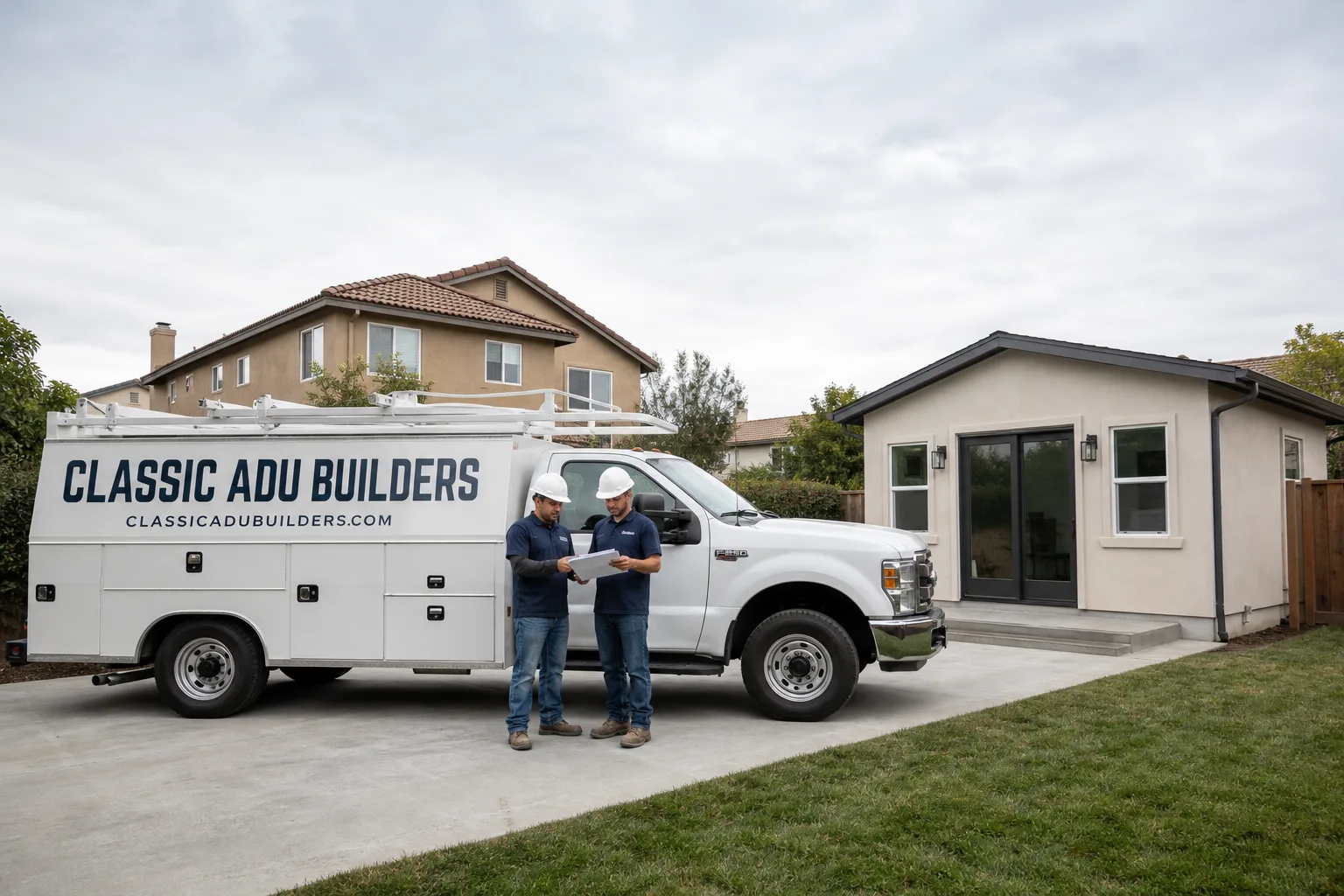
Fast, Reliable ADU Builders Across San Antonio Heights
ADU construction in San Antonio Heights runs $180,000 to $420,000 for a detached one-bedroom unit, with most full prefab installations landing between $240,000 and $330,000 once County permits, hillside grading, and fire clearance are included. Our team has scoped and built accessory units throughout the 91784 ZIP code, from flat parcels near the Upland line to steep foothill lots off Mountain View Avenue and 23rd Street. We know this is LA County territory, not city territory, and we plan for what that actually means before we quote. Call (877) 265-5587 to schedule a free estimate and get a line-item breakdown specific to your lot.
Why Classic ADU Builders Is San Antonio Heights’s Preferred ADU Builders Company
Homeowners in San Antonio Heights don’t have the luxury of a simple building department. Everything routes through LA County’s Department of Regional Planning and Building and Safety, which means Plan Check comments come from reviewers who apply hillside grading and fire clearance standards to every sheetset. We’ve been through that sequence enough times to know which items get flagged first: fuel modification zones, slope-density calculations, septic system setbacks, and access drive standards for fire apparatus. That local fluency keeps your project from stalling at the counter.
Our San Antonio Heights customers repeatedly mention two things in project follow-ups. First, that our quotes included engineering and County review costs that other contractors left out until week six. Second, that our crews showed up prepared for unpaved drives, tight turnarounds, and long material hauls up Euclid Avenue. Noel Carrasco, our Owner, walks every San Antonio Heights site before we price it. Not a sales rep. The person who signs your contract.
ADU Construction in San Antonio Heights
ADU Construction in San Antonio Heights means building a permitted, legal dwelling unit on a single-family parcel, and here it specifically means building under LA County’s hillside and fire safety regulations rather than a municipal building code. Most homes in this community were built between the 1950s and 1980s on sloping lots with mature oaks and limited flat pads. That shapes every decision: where the unit sits, how the foundation steps down, how drainage gets redirected, and what the exterior must be clad with to pass fire clearance.
A typical one-bedroom, one-bath ADU here runs $220,000 to $340,000 depending on site access, slope severity, and whether you go prefab or site-built. If your lot has a septic system and well, add another $15,000 to $35,000 for setback compliance, leach field verification, and site plan revisions. We prepare every San Antonio Heights quote with the County review sequence already mapped, so you aren’t surprised by a grading plan requirement after signing.
County Permitting and Hillside Review
San Antonio Heights has no city hall. Your ADU permit goes through LA County Planning and Building and Safety, which reviews your site plan for hillside grading, drainage, and fire clearance in a single sequence. That routinely adds three to six months to a project that would clear a neighboring city in six weeks. We handle the submittals, respond to comments, and keep the County’s timeline moving.
Grading and Drainage on Sloping Lots
Most parcels off 23rd Street and Mountain View Avenue slope enough that a standard foundation plan won’t work without a grading and drainage study. We scope retaining walls, stepped footings, and swales before quoting, because those are fixed costs on a hillside lot. Flat-lot ADU prices you see advertised elsewhere do not include any of this.
Detached ADU in San Antonio Heights
Detached ADU construction in San Antonio Heights is the most common request we receive, and for good reason: most lots here have the acreage to place a separate unit behind or beside the main house without triggering a property line variance. A detached ADU in the 91784 ZIP code typically costs $200,000 to $380,000, with the higher end reflecting steep slope foundations, long equipment hauls, and fire-resistive exterior assemblies. You get a fully independent unit with its own entrance, kitchen, bath, and address.
Parcel size in San Antonio Heights works in your favor here. Many lots are a half-acre or larger, which gives us room to site a unit without crowding the primary home or removing mature trees. But acreage also brings septic and well setbacks into play, and those often dictate exactly where the ADU can sit. We map those constraints on the first site visit.
Siting Behind Existing Shops or Outbuildings
Quite a few San Antonio Heights properties have a detached garage, workshop, or barn that owners want to keep. We can place a detached ADU behind or beside that structure, provided the County’s setback rules from the septic system and property lines are met. The shop stays. The new unit gets its own meter panel, water line, and fire-rated separation.
Fire-Resistive Exteriors and Defensible Space
Because San Antonio Heights sits in a high wildfire risk zone, LA County requires fire-resistive siding, ember-resistant vents, and a defensible space plan for any detached ADU. We specify James Hardie fiber cement on nearly every hillside unit we build here. It holds up to Santa Ana wind-driven embers better than wood or vinyl, and it passes County fire clearance without negotiation.
Trusted Brands We Service in San Antonio Heights
We work with prefab and modular systems from Boxabl, Plant Prefab, and Mighty Buildings, and we build custom site-built units as well, including Tuff Shed conversion projects where the budget is lean and the lot is level. For San Antonio Heights specifically, we keep a stock of common fire-rated trim, ember-resistant vent covers, and James Hardie siding panels locally available so our crews aren’t waiting on supply runs from the Inland Empire. The brand decision comes down to your lot, your timeline, and your budget. We walk through the differences honestly. Ask us what a Boxabl unit actually feels like on a hillside versus a site-built frame with Hardie cladding. We’ll tell you the trade-offs without a sales pitch.
Common ADU Builders Problems We See in San Antonio Heights Homes
- Quotes built from city templates. A flat-lot ADU price from Upland or Rancho Cucamonga does not include LA County hillside grading review, fire clearance, or engineering for a sloped pad. The real cost shows up in change orders after the contract is signed. We price County requirements upfront.
- Septic and well setbacks ignored until the last minute. On acreage with a leach field, the septic system often dictates where the detached ADU can go, not the homeowner’s preferred location. We pull septic records and map setback envelopes before we finalize any siting recommendation.
- Long hauls and steep unpaved drives underestimated. Equipment delivery, concrete pump placement, and crane access cost more when the driver has to climb a narrow dirt road off Mountain View Avenue. Flat-lot labor numbers don’t cover that. Our quotes include access time for San Antonio Heights specifically.
- Older infrastructure limiting electrical and water service. Homes built from the 1950s through the 1980s often don’t have spare panel capacity or a water service line sized for a second dwelling. We scope panel upgrades and water service extensions during the estimate, not after framing starts.
Pricing for ADU Builders in San Antonio Heights, CA
San Antonio Heights ADU pricing, based on projects we’ve scoped and built here, typically falls into these ranges:
- Studio ADU (site-built): $185,000 to $260,000
- One-bedroom detached ADU (prefab or modular): $220,000 to $330,000
- Two-bedroom detached ADU (custom site-built): $280,000 to $420,000
- Junior ADU (garage conversion inside existing footprint): $90,000 to $150,000
- Tuff Shed conversion to permitted ADU: $110,000 to $180,000 depending on foundation, insulation, and finish level
Slope severity, septic and well setback compliance, and fire clearance requirements are the three variables that move a San Antonio Heights quote most. A flat half-acre off Euclid Avenue might not need any of the expensive corrections a steep lot off 23rd Street does. That’s why we walk every site before quoting. Call (877) 265-5587 for a free, written estimate with actual line items, not round numbers.
We Also Serve Cities Near San Antonio Heights
Our ADU Builders team now serves San Antonio Heights and the surrounding foothill communities. We also cover San Antonio Heights projects in Upland, Claremont, Rancho Cucamonga, and Montclair. If you’re in unincorporated territory or a neighboring incorporated city, the permitting path will be different, but the build quality stays the same.
Serving San Antonio Heights, CA — Our Local Coverage Area
We’re based in the San Antonio Heights area and know this community well. Use the map below to see our service coverage — if you’re nearby, we can almost certainly help.
FAQs About ADU Builders in San Antonio Heights
LA County’s Department of Regional Planning and Building and Safety issues all ADU permits in San Antonio Heights, because the community is unincorporated and has no city building department. Plan Check includes hillside grading, drainage, and fire clearance reviews that a city-issued permit would not require. Expect the sequence to add three to six months compared to a flat-lot ADU in Upland or Claremont. Call (877) 265-5587 and we’ll map the County timeline for your specific parcel.
Yes, but the septic system, not the buildable pad, usually determines where the detached ADU can sit in San Antonio Heights. LA County requires specific horizontal setbacks between any dwelling and the leach field, plus space for the existing system to be repaired or expanded if needed later. We pull your septic records and survey the well location before quoting, so the siting decision is based on actual constraints, not preference. Call (877) 265-5587 for a free site review.
Yes, every ADU in San Antonio Heights must meet LA County’s fire clearance standards, which include fire-resistive exterior cladding, ember-resistant vents, and a defensible space plan around the unit. We specify James Hardie fiber cement on most hillside builds here because it performs far better in Santa Ana wind-driven ember conditions than wood or vinyl. The added material cost is typically $8,000 to $15,000 on a detached unit. Call (877) 265-5587 to get fire-resistive options priced for your lot.
Steep lots and open acreage in San Antonio Heights add real, predictable costs: grading and drainage plans, stepped or retaining-wall foundations, longer equipment hauls up unpaved drives, and sometimes a concrete pump that a flat city lot never needs. Those items can add $25,000 to $60,000 to a project. We itemize every access and grading cost upfront so the number you sign is the number you pay. Call (877) 265-5587 for a line-item estimate.
Yes, if your parcel has the space to meet LA County’s setback requirements from the shop, the main house, the septic system, and the property lines. On a sloping lot off Mountain View Avenue, our crew scoped a detached ADU behind an existing shop building, which meant pulling equipment up a narrow, unpaved drive and setting the foundation grade so the shop’s drainage didn’t sheet toward the new unit. We ran James Hardie fiber-cement siding and fire-resistive detailing to satisfy County fire clearance, and the homeowner got a separate, legal rentable unit without losing the shop. Call (877) 265-5587 and we’ll tell you if your outbuilding can stay.
What Building in an Unincorporated Foothill Community Actually Costs You
San Antonio Heights is unincorporated, which means no city hall, no local planning counter, and no streamlined ADU ordinance. Your project goes to LA County’s Department of Regional Planning and Building and Safety, where hillside grading and fire clearance reviews run on the same plan set. That sequence routinely adds three to six months, and the engineering documentation to support it adds $15,000 to $40,000 to a project that a comparable flat-lot ADU in Upland or Claremont never sees. If you’re comparing quotes, make sure the other contractor has actually permitted in LA County’s hillside zones. If they haven’t, their number is missing the cost of the review they haven’t faced yet.
Then there’s the land itself. Most San Antonio Heights homes were built from the 1950s through the 1980s, on slopes, with mature trees and limited flat space. Many parcels are on septic systems and wells. All of that changes where a detached ADU can go, how the foundation steps, and what the County will approve. We walk every parcel before quoting because the leach field, not your preferred spot, often dictates the buildable area. We scope it before you sign, not after.
Written by Noel Carrasco, Owner at Classic ADU Builders, serving San Antonio Heights and surrounding foothill communities.