
Emergency ADU Builders Near Me: What Placentia Homeowners Should Do First
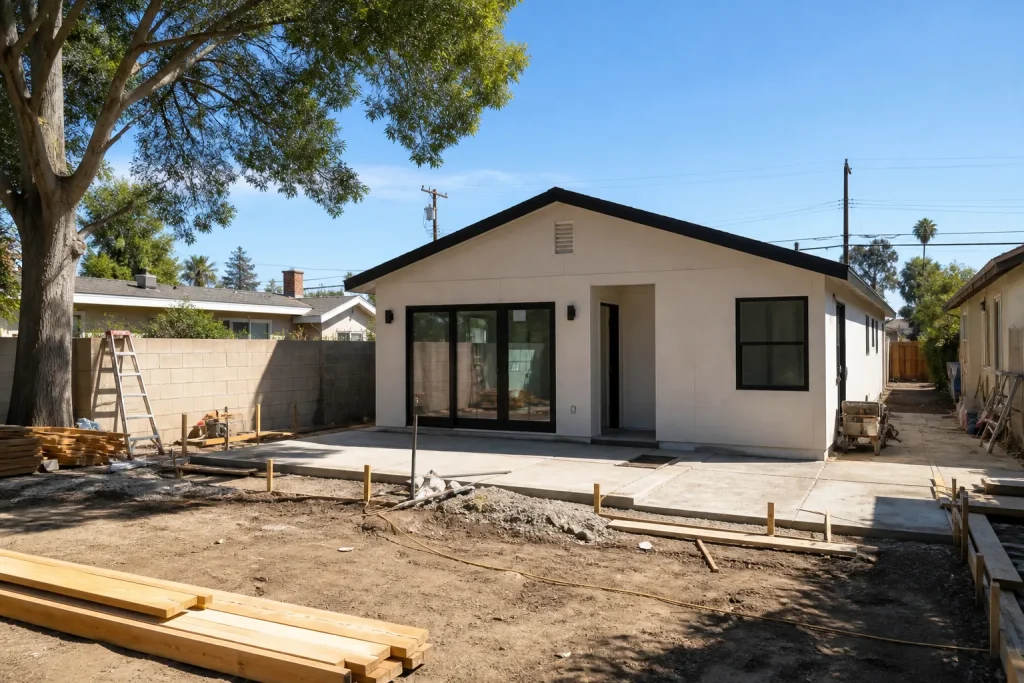
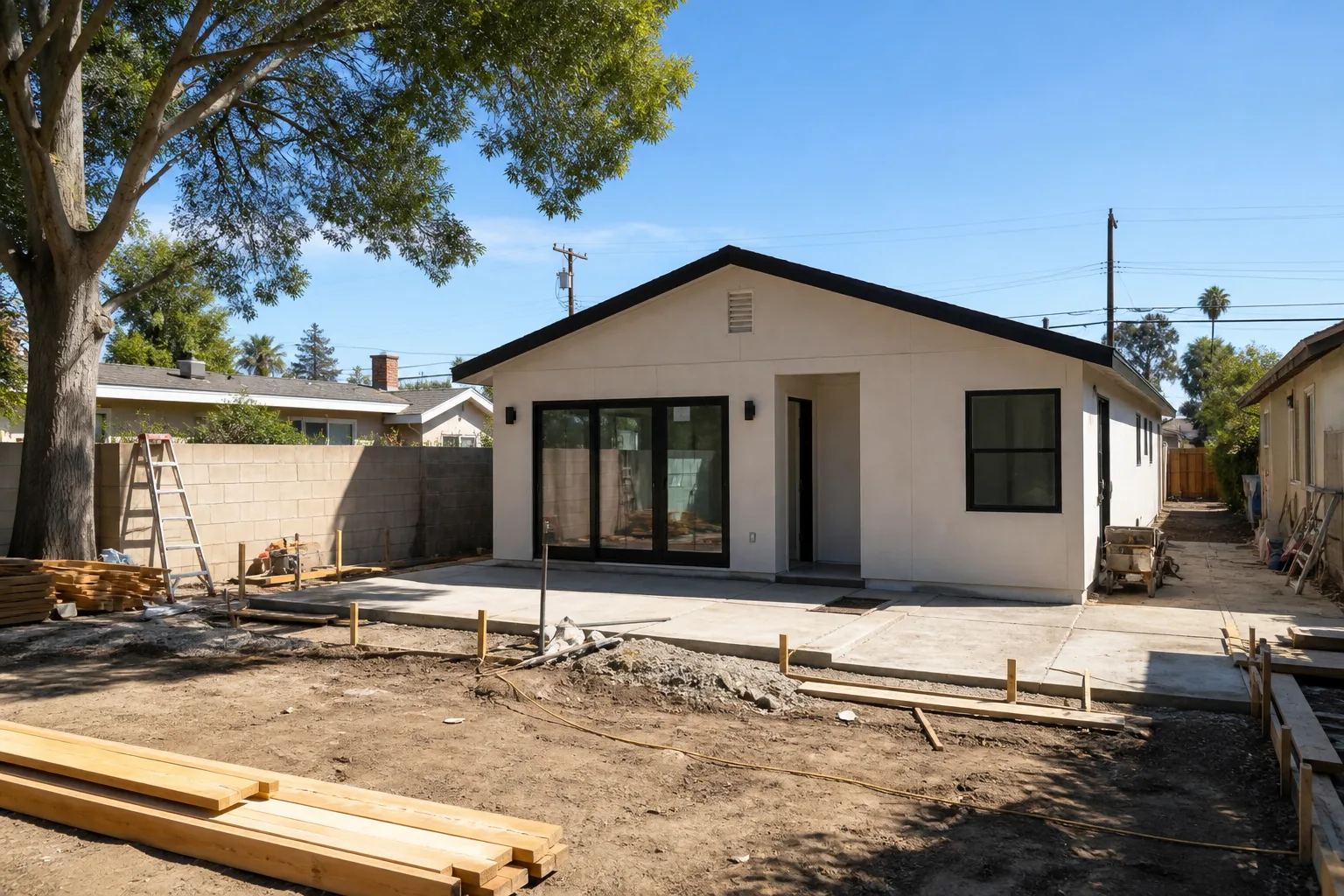
If your ADU contractor just walked off the job in Placentia, your first call should be to the Contractors State License Board, not another builder. Your second call goes to the bonding company listed on your contract, because the bond is your fastest path to financial recovery. After that, you need a sequenced plan to document everything, assess the site, and decide whether to restore the project or restart it. If you’d rather not handle this alone, call Classic ADU Builders at (877) 265-5587 for a free assessment of your situation.
Why the First 48 Hours Decide Everything
California’s Contractors State License Board (CSLB) can open a formal complaint against a licensed contractor within five business days. But here’s what most Placentia homeowners don’t realize: the CSLB complaint is only useful if you file while the contractor still holds an active license and bond. Wait three months, and you might discover the contractor has let the bond lapse or closed the business entity entirely. We’ve seen this exact scenario play out near Alta Vista Country Club, where a homeowner on a detached ADU discovered the contractor had dissolved his LLC two weeks after abandoning the job. The complaint still got filed, but the bond company had no obligation to pay because the policy had already expired.
Your first 48 hours should follow this sequence:
- Hour 1: Photograph the entire site. Every wall, every exposed connection, every material stack. Use a timestamp app.
- Hour 2: Pull every document related to the project: the signed contract, change orders, payment receipts, inspection reports, and any text messages or emails with the contractor.
- Hour 4: Call the CSLB at (800) 321-CSLB and open a complaint. Reference your contractor’s license number, which should be on the contract.
- Hour 8: Contact the bonding company. The bond number is also on the contract, usually near the license information.
- Hour 24: Notify your lender, if you have one. Construction loans often have clauses requiring immediate disclosure of contractor abandonment.
- Hour 48: Request a stop work order from the City of Placentia if work has halted and the site is unsafe or exposed to weather.
Do not, under any circumstances, hire another contractor to start working before you’ve documented the existing conditions and filed the CSLB complaint. That’s the single most common mistake we see, and it can wreck your legal position.
What a Stop Work Order Actually Means in Placentia
A stop work order is not a project death sentence. In Placentia, the Building Division issues stop work orders when work proceeds without inspections, when a contractor’s license lapses mid-project, or when safety violations are found. The order attaches to the permit, not the property permanently, and it can be lifted once the underlying problem is corrected and the city re-inspects.
Here’s the sequence that matters: when you call the City of Placentia to request a project status report, ask for three specific things. First, request the full permit history, including every inspection that passed and failed. Second, ask whether the contractor’s license was active at the time of each inspection, because Placentia cross-checks CSLB records against active permits. Third, ask what specific corrections are required to lift the stop work order. In our experience replacing abandoned projects around Placentia, most stop work orders lift within two to four weeks once a licensed contractor submits the corrected work and schedules the reinspection.
One thing to know: a stop work order can actually protect you. If a contractor abandoned your project with open electrical or plumbing connections, the city’s order prevents anyone from quietly continuing unpermitted work. That’s a liability shield while you sort out the mess.
How to Spot a Legitimate Rescue Contractor vs. an Opportunist
When word gets around that a Placentia ADU project has stalled, you’ll start hearing from contractors. Some genuinely want to help. Others see a distressed homeowner and a half-finished structure as a blank check. The difference usually shows up in three contract terms.
First, a legitimate rescue contractor will insist on documenting the existing work before quoting. They’ll walk the site, photograph everything, and give you a written assessment of what’s salvageable and what isn’t. An opportunist will give you a ballpark over the phone. Second, a real professional will want the CSLB complaint and any engineering reports before drafting a contract. They need to know what legal and structural liabilities they’re inheriting. An opportunist won’t care about any of that. Third, and this matters most, a legitimate rescue contractor will put fixed pricing in writing with a detailed scope of work that says exactly what gets torn out, what gets saved, and what gets built new.
These three contract terms protect you:
- As-built condition documentation: A clause stating the contractor has inspected and photographed the existing work and accepts responsibility for it from the date of contract signing, not retroactively.
- Fixed price with a written change order process: No verbal changes. No open-ended allowances. If extra work is discovered, it goes through a formal change order you sign before the work happens.
- Completion timeline with defined milestones: Not a vague “as soon as possible.” Specific dates for rough inspection, drywall, finish, and final inspection.
Classic ADU Builders has taken over distressed projects in Placentia before, and we approach every one with the same first step: we walk the site, document everything, and tell you honestly whether the existing work is worth saving. Sometimes it is. Sometimes it’s cheaper to start fresh. We’ll tell you which, even if it means we make less money on the job.
Structural Problems: When the Engineer of Record Has to Show Up
Mid-construction structural discoveries are a different kind of emergency. A foundation crack, a shifted beam, or a wall that’s out of plumb by more than an inch after framing all require the same first response: stop work and call the engineer of record. This is not optional, and any contractor who tells you to keep going is giving you advice that will void your insurance and likely your permit.
The engineer of record is the person who stamped your ADU’s structural plans. They’re the only one legally qualified to assess whether the observed condition matches the design intent or represents a genuine failure. In Placentia, where soil conditions range from stable clay to sandy loam depending on the neighborhood, a foundation crack that looks minor can indicate differential settlement that the original design never anticipated. The engineer’s field visit typically costs $500 to $1,500, and it’s the best money you’ll spend on a distressed project.
Here’s what happens at a typical engineer visit: they’ll measure the crack or deflection, check the foundation for signs of movement, and compare what they see against the geotechnical report filed with the original permit. Then they issue a written finding. It’ll be one of three things: the condition is cosmetic and work can continue, the condition needs a repair detail that gets added to the permit, or the condition requires a redesign and the current work has to come out. You cannot make that call yourself, and neither can a general contractor. If your original contractor won’t arrange this visit, arrange it yourself. The engineer works for you, not for them.
Construction Defects vs. Contractor Fraud: Two Different Insurance Paths
Homeowners routinely conflate construction defects with contractor fraud, and doing so costs them time and money they can’t get back. A defect is a workmanship or material failure: a leaking window, improperly flashed roof penetration, tile that cracks because the substrate was wrong. Fraud is a legal term: the contractor took money for work they never intended to perform, billed for materials that don’t exist, or deliberately concealed known problems.
Here’s why the distinction matters in Placentia. A construction defect claim typically goes through your homeowner’s insurance or through the contractor’s general liability policy, and it requires proof the work fell below the standard of care. These claims move slowly and often end in arbitration. A fraud claim goes through the CSLB and the contractor’s bond first, then potentially to criminal court through the Orange County District Attorney’s office. Fraud claims can move fast, but only if you file the CSLB complaint during the window when the bond is still active.
The practical takeaway: document everything before you start spending money on repairs. Take photos. Save receipts. Write down every conversation. And don’t assume one insurance claim covers everything. A Placentia homeowner who discovers water damage from a poorly flashed ADU roof may have both a defect claim (against the roofer’s insurance) and a fraud claim (if the roofer billed for flashing they never installed). Those are separate filings, separate processes, and separate timelines.
What It Costs to Restart an Abandoned ADU in Placentia
Restarting an abandoned ADU isn’t a simple matter of hiring someone new to finish the work. You’re paying for three things at once: the assessment to figure out what’s salvageable, the correction work to fix what the previous contractor did wrong, and the completion work to get the unit to final inspection. In Placentia, a typical abandoned project costs between 15% and 30% more to complete than the original contract called for, simply because the new contractor has to work around and undo existing conditions.
We’ve taken over projects where the original contractor’s framing was actually solid and the only real issue was the abandonment itself. Those restarts move fast and the premium is small. We’ve also taken over projects where the original work was so far out of code that tearing it out and starting over was the cheaper path. The range is wide, which is why any honest assessment starts with a site visit, not a phone call.
If your Placentia ADU project has stalled, the most useful thing you can do is have a contractor who understands the full ADU landscape walk the site and tell you what you’re actually dealing with. Classic ADU Builders works across modular systems from Abodu, Cover, Dvele, and Mighty Buildings, as well as Tuff Shed conversions and custom site-built construction, so our assessment isn’t filtered through the lens of one product we’re trying to sell. We’ll tell you if a prefab solution makes more sense than finishing the stick-built shell, or if the existing work is solid enough to restore.
The Bottom Line
An ADU emergency in Placentia comes down to sequence: document the site, file the CSLB complaint, notify the bonding company and your lender, get a stop work order if needed, and bring in the engineer of record before anyone touches a structural question. The contractors who act fast on those first steps recover their projects. The ones who wait end up in disputes that drag on for months.
If you’re in Placentia and need help with an abandoned or stalled ADU project, Classic ADU Builders home offers free site assessments. We’ll walk the property, tell you honestly what’s worth saving, and put a fixed price in writing before any work starts. Call (877) 265-5587 to schedule yours.
Frequently Asked Questions
File within 48 hours of confirmed abandonment. The CSLB complaint triggers a bond claim window, and bonds lapse when contractors let their licenses expire. Every day you wait is a day the bond may no longer be collectible. Call the CSLB at (800) 321-CSLB with the contractor’s license number and project address ready. For a free assessment of your specific situation in Placentia, call Classic ADU Builders at (877) 265-5587.
No. A stop work order from the City of Placentia means all construction activity on the permit must cease until the Building Division lifts the order. Continuing work violates the order and can result in fines, permit revocation, and liability for unpermitted construction. The order lifts once a licensed contractor corrects the underlying issue and passes reinspection. ADU Builders in Placentia can assess what it’ll take to get your project back in compliance.
An engineer of record field visit for a Placentia ADU typically runs $500 to $1,500, depending on the complexity of the issue and whether written findings are required. The visit is mandatory before any further structural work proceeds when a crack, shift, or deflection appears. Skipping it voids your insurance and leaves you legally exposed. If you’re not sure whether your situation needs an engineer, call (877) 265-5587 and we’ll help you figure it out.
Usually not directly. Contractor abandonment is primarily a bond claim, not an insurance claim. However, if the abandonment caused damage, like exposed framing that allowed water intrusion, that damage may be covered under your policy as a sudden event. Construction defects and contractor fraud are separate claim paths entirely. For questions about rebuilding after an abandonment, Bathroom Remodeling in Placentia and Kitchen Remodeling in Placentia are part of Classic ADU Builders’ full-service capability, from ADU shell to finished interior.
Written by the team at Classic ADU Builders, serving Placentia since 2015.
Need ADU Help?
Call Classic ADU Builders — licensed & insured, here with fast after-hours help in Placentia.
(877) 265-5587